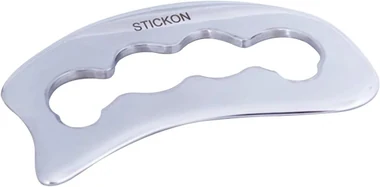
STICKON-33
Guide
What the research actually says about scraping tools
National health bodies on manual therapy, quoted word for word, including the parts that say the evidence is weak.
Steel scrapers sell on promises. Read three product pages in a row and you will meet promises about the bloodstream, the immune system and the lymph, usually with no source attached. This page does the opposite. It quotes the national bodies that review the research, and it quotes them where they are unflattering as well as where they are encouraging.
The short version: soft tissue work has modest support for short-term pain, the quality of the underlying studies is poor, and the serious risks are rare but real. That is a reasonable basis for buying a twenty dollar tool. It is not a basis for treating anything.
Where the evidence sits today
The National Center for Complementary and Integrative Health, part of the National Institutes of Health, keeps a summary of what research on massage therapy has found. On low-back pain, the most studied use, it is blunt.
“Several evaluations of massage for low-back pain have found only weak evidence that it may be helpful.”
National Center for Complementary and Integrative Health, NIH, Massage Therapy: What You Need To Know. Read 12 September 2026.
It goes further about the largest review it cites, a 2015 look at 25 studies with 3,096 people between them.
“because the quality of the studies was low, the investigators who conducted the review concluded that they had “very little confidence” that massage is an effective treatment for low-back pain”
National Center for Complementary and Integrative Health, NIH, Massage Therapy: What You Need To Know. Read 12 September 2026.
Those two sentences are worth more than any marketing page, including ours. Short-term relief shows up in the studies. Confidence in the result does not, because the studies themselves were weak.
Instrument assisted work with a steel tool is a cousin of hand massage rather than the same thing, and it carries less published research, not more. Anyone who tells you the tool is proven is describing a wish.
What the tools are, in plain terms
A scraper is a piece of stainless steel with one or more working edges. You hold it at an angle to the skin, usually over an oil or a balm, and move it along the muscle with steady pressure. Therapists call the family IASTM, for instrument assisted soft tissue mobilization. The older folk version, gua sha, uses the same motion with a ceramic spoon or a jade plate.
In this catalogue the maker names the steel as medical grade on 66 of 67 pages and calls the edges double-beveled on 56. A double bevel means the edge is ground on both faces, so one tool works in both directions of travel.
What the steel does not do is anything chemical. It moves skin and the tissue under it, and it lets you feel where that tissue resists. Everything else on the subject is inference.
Who uses them, according to the maker
The maker lists the same professional roles on 60 pages: chiropractors, physical therapists, occupational therapists, athletic trainers and massage therapists. That list tells you the context these tools were designed for. A clinician uses one as part of a treatment plan, with hands on the patient and an eye on the response.
At home the sensible version is narrower. Warm the area, work slowly, stop early, and treat the tool as a way to reach tissue your thumbs cannot hold pressure on for long.
The risks nobody prints on the box
The same national summary is direct about harm, and this is the paragraph most product pages leave out.
“The risk of harmful effects from massage therapy appears to be low. However, there have been rare reports of serious side effects, such as a blood clot, nerve injury, or bone fracture.”
National Center for Complementary and Integrative Health, NIH, Massage Therapy: What You Need To Know. Read 12 September 2026.
Rare is not never. Vigorous work and fragile tissue are the two conditions that turn up in the reported cases, and a steel edge concentrates force better than a hand does. If you take an anticoagulant, bruise without cause, or have a clotting disorder, this is a conversation for a clinician before it is a purchase.
The second honest caution is about injuries. A tool does not belong on a fresh one. The National Institute of Arthritis and Musculoskeletal and Skin Diseases describes the usual first response to a sports injury this way.
“many can be treated at home by resting, icing, compressing, and elevating (R-I-C-E) the injured part of the body. For severe injuries, you will need to see a health care provider, who may recommend a course of physical therapy for rehabilitation and/or a cast, splint, or brace.”
National Institute of Arthritis and Musculoskeletal and Skin Diseases, NIH, Sports Injuries. Read 12 September 2026.
What we will and will not claim
STICKON tools are steel shapes for muscle and soft tissue work. They do not diagnose, treat or cure. We do not repeat claims about blood, immunity or organs, including claims that have appeared under this brand name elsewhere, because no source we can read supports them.
What the STICKON view can support is small and useful. A shape reaches a surface or it does not. An edge is beveled on both faces or one. A tool weighs what the maker says it weighs. Those facts sit on every product page here, and you can check each one before you spend anything.
Tools people start with
See more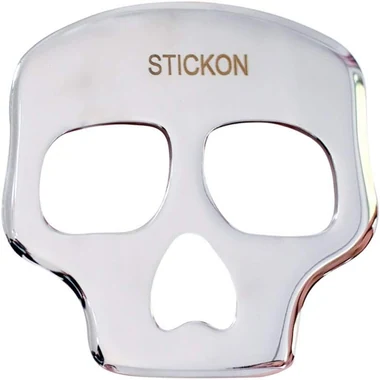
Stainless Steel Gua Sha Massage Tool - Great Soft Tissue Mobilization -
4.8″ long 4.9 out of 5 (41) $34.99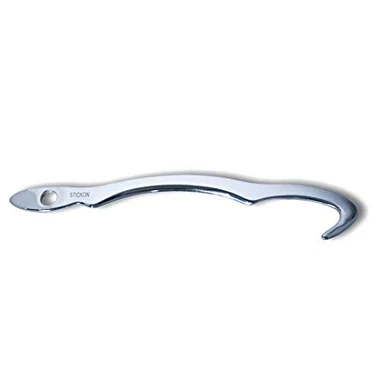
STICKON-07
Stainless Steel Gua Sha Scraping Massage Tool IASTM Tools Great Soft
Back and spine · Neck and jaw 4.8 out of 5 (23) $44.99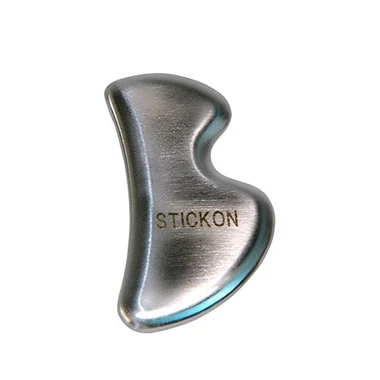
B
Stainless Steel Gua Sha Scraping Massage IASTM Soft Tissue Mobilization
5.11″ long · 2.8 oz 4.7 out of 5 (6,021) $9.99Sources
- Massage Therapy: What You Need To Know, National Center for Complementary and Integrative Health, NIH. Read 12 September 2026.
- Sports Injuries, National Institute of Arthritis and Musculoskeletal and Skin Diseases, NIH. Read 12 September 2026.