STICKON-33
Stainless IASTM and gua sha tools
Steel shapes, matched to the muscle
STICKON makes stainless scrapers for soft tissue work. Every page carries the shape letter the maker stamps on the tool, the body areas it names, and the length and weight it states, so the choosing happens before you buy rather than after the parcel opens.
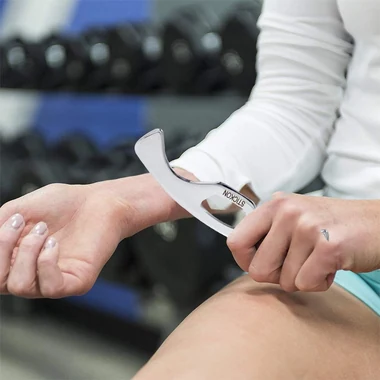
One tool, one edge
Single scrapers people start with
All single scrapersSorted by the rating each tool carries today. A single scraper covers most of a session once you know which edge you want against the skin.
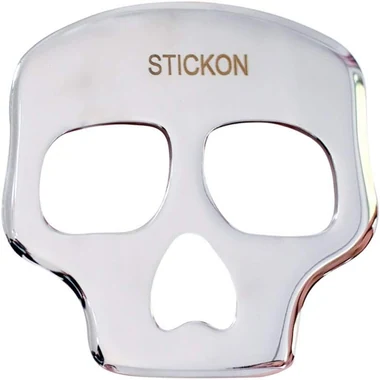
Stainless Steel Gua Sha Massage Tool - Great Soft Tissue Mobilization -
4.8″ long 4.9 out of 5 (41) $34.99
STICKON-07
Stainless Steel Gua Sha Scraping Massage Tool IASTM Tools Great Soft
Back and spine · Neck and jaw 4.8 out of 5 (23) $44.99
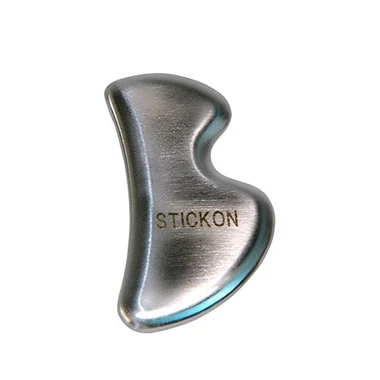
B
Stainless Steel Gua Sha Scraping Massage IASTM Soft Tissue Mobilization
5.11″ long · 2.8 oz 4.7 out of 5 (6,021) $9.99
67tools in stockEvery one of them has a price in our last update.
58named shapesThe letter on the steel is the maker's own, not our invention.
8body areasEach area page holds only the tools the maker names for it.
56double-beveledGround on both faces, so one tool works in both directions.
Start with the body
Where you plan to work decides the shape
The maker names the areas for each tool in its own bullets. These pages hold only the tools where that name appears, so a calf page never fills up with a jaw tool.
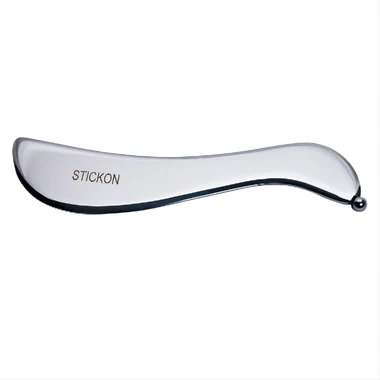
One tool, chosen well
A single scraper is the cheapest way in and the one most people keep using. You hold it at an angle, move slowly, and let the edge do the work.
- Long curves ride calves, quads and the back of a shoulder.
- Hooks and sickles reach shins, forearms and the edge of the spine.
- Combed edges spread the load when the skin marks easily.
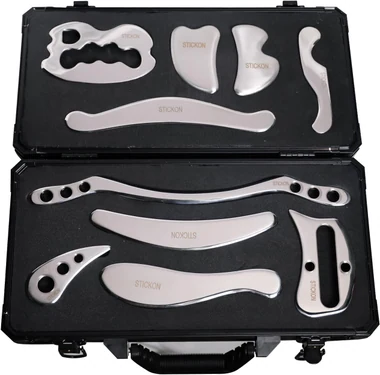
Or a set that covers two jobs
A set answers the problem above by putting the wide shape and the narrow one in the same box. 32 of them sit in the range, from $19.99.
- Two and three piece boxes, most with a folding case.
- The usual pairing is a wide shape for legs and a narrow one for shins.
- Check the piece count in the name: boxes look alike in a photograph.
Shapes in numbers
How the shapes differ
Shape letters look arbitrary from the outside. They are not. The letter tells you the outline, and the outline tells you which surfaces the tool can hold contact on.
A scraper has more than one working line, and the lines do different jobs. The long curve rides down a calf and keeps contact over a wide stretch. The short hook sits under a shoulder blade or along the shin, where a wide curve loses the surface.
The table comes from this catalogue rather than from a brochure. Every number in it is the one the maker states for that tool, and the rows step through the range from the shortest tool to the longest.
Read it as a pair of numbers. Length says how much surface the tool covers in one pass. Weight says how much of the pressure the tool brings on its own, which is the difference between working a thigh and working a shin.
| Shape | Kind | Length | Weight | From |
|---|---|---|---|---|
| STICKON-64 | Trigger point pens | 3″ | not stated | $12.99 |
| STICKON-05 | Single scrapers | 5.2″ | not stated | $29.99 |
| STICKON-58 | Tool sets | 7″ | not stated | $19.99 |
| STICKON-51 | Single scrapers | 7.08″ | 4.6 oz | $19.99 |
| STICKON-38 | Tool sets | 7.87″ | 12.3 oz | $39.99 |
| STICKON-56 | Tool sets | 7.87″ | not stated | $29.99 |
| STICKON-06 | Single scrapers | 8″ | not stated | $29.99 |
| K | Tool sets | 14.96″ | 35.3 oz | $79.98 |
The shape index
Every letter is a different outline
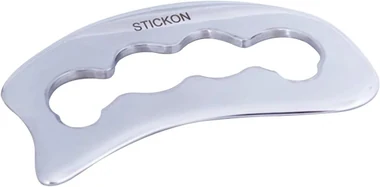
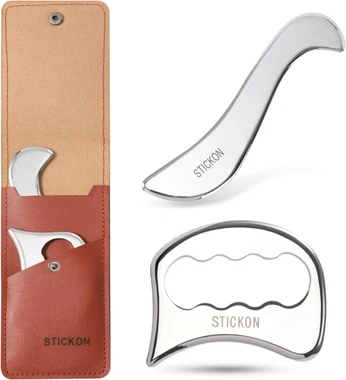
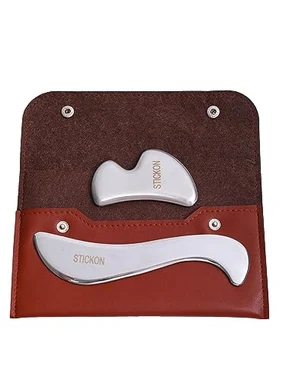
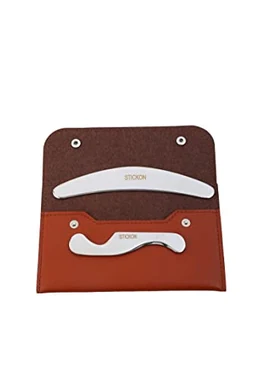
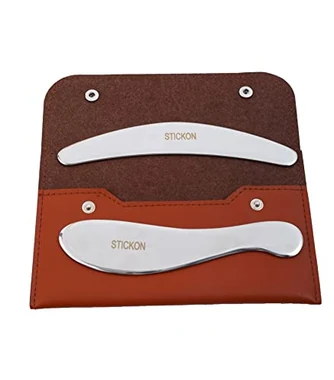
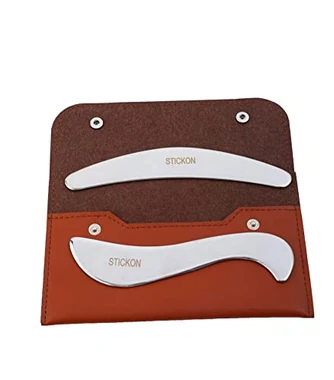
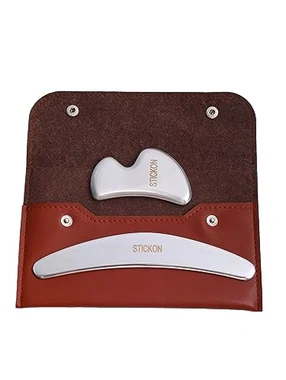
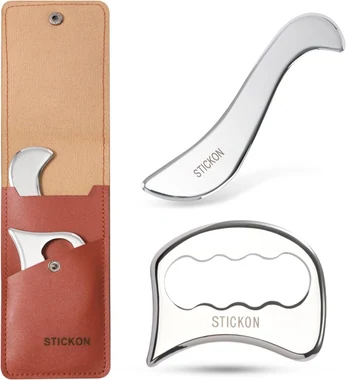
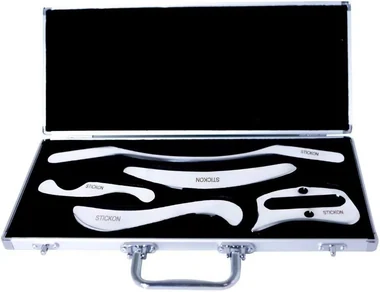
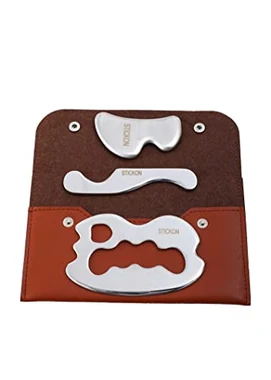
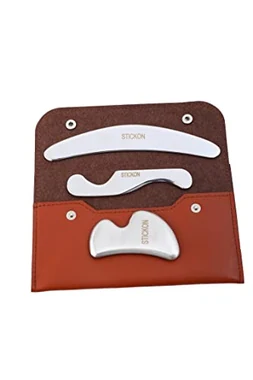
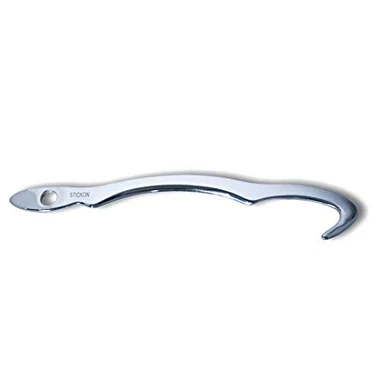
Every shapeOf the 67 tools here, the maker calls the edges double-beveled on 56 and names medical-grade stainless steel on 66. Scroll the strip: the letter, the outline and the price of each.
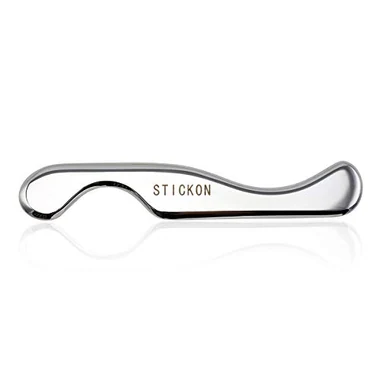
Two and three at a time
Sets, when one edge is not enough
All setsThe boxes people buy after the first month, sorted by rating. 32 in the range, from $19.99.
STICKON-49
Stainless Steel Gua Sha Muscle Scraper Tool Set 2 in 1 Scraping Massage
7.87″ long · 7.4 oz 4.9 out of 5 (49) $19.99
STICKON-36
Gua Sha Stainless Steel 2 Pack Metal Muscle Scraper Tools Set
7.87″ long · 9.2 oz 4.9 out of 5 (49) $29.99
STICKON-35
Stainless Steel Gua Sha 2 in 1 Scraping Massage Tools Scar Tissue Tool
7.87″ long · 10.6 oz 4.9 out of 5 (49) $27.99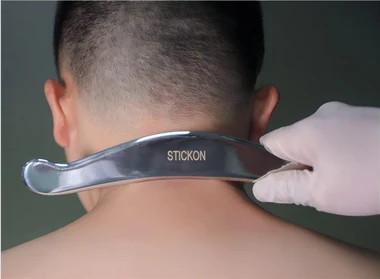
Pressure and marks
What a shape will not do
A thin sickle reaches between tendons and slips off a broad back. A wide comb covers a back in a few passes and cannot get near the small joints of the hand. Buying one tool and expecting both jobs ends with a drawer and a refund.
The same honesty goes for the skin. Steel moves tissue and leaves colour when the pressure is wrong, and the guide below quotes the national sources on when that colour stops being ordinary.
Marks and pressureRead first
Three pieces before the first session
01
What the research actually says about scraping toolsNational health bodies on manual therapy, quoted word for word, including the parts that say the evidence is weak.
02
Pick a shape by the body area, not by the photographWhich outline holds contact on a calf, a shin or a jaw, with the counts and lengths measured from this catalogue.
03
Marks, pressure and knowing when to stopWhy scraping leaves colour, what a bruise actually is, and the signs that mean put the tool down.
The brand
About STICKON
STICKON started in 2017 around a single question: why does a steel scraper cost as much as a massage table when it is a piece of polished metal that fits in one hand? The first shape in the range was a plain curve for calves. Everything since then has come from people asking for an edge that reaches somewhere the curve cannot.
Today the STICKON range runs to 67 tools in 58 named shapes, plus 32 sets and 3 trigger point pens. That sounds like a lot of variety for one job, and it is. The reason is simple: a human body has flat planes, long ropes of muscle and small knobby joints, and no single outline holds contact on all three.
The tools are stainless steel with the faces polished to a mirror. Polish is not decoration. A rough face drags on dry skin and turns a slow pass into a scrape, while a polished face slides under your own pressure and lets you feel what is under the edge. The maker calls the steel medical grade on 66 of the pages here, and we repeat that wording rather than inventing a certificate to go with it.
The STICKON approach to shapes is to name them and keep them. A letter stays with an outline, so the B you buy this year is the B your therapist handed you two years ago. Shapes with numbers instead of letters came later, once the sensible letters ran out and the variations needed numbering.
We are careful about what we claim. A steel tool moves skin and the soft tissue under it. It does not cure anything, and the research on manual therapy is thinner than most shops admit. The guides on this site quote national health bodies word for word, including the parts that say the evidence is weak, because you deserve the real picture before you spend twenty dollars on a piece of steel.
What the people behind STICKON can tell you with confidence is narrow and practical. Which shape reaches a shin. What a tool weighs. Which edge is beveled on both faces. Where the tool stops being the right one. That is the part we control, and it is the part every page here starts with.
Prices on this site come from our own update runs, and the footer of every page links to the day we last made one. When a tool has no price, its page comes down until it returns. We would rather show you a shorter range than a shelf of dead links.